Does Sodium Hypochlorite Lose Strength? Understanding Shelf Life, Available Chlorine and Storage
Available chlorine in a sodium hypochlorite solution can change with time and storage conditions. Distinguishing unopened stock, opened stock and diluted working solution helps you understand shelf life and match purchasing to actual consumption.
On this page
- First, Distinguish Unopened Stock, Opened Stock and Diluted Solution
- Why Do Storage Conditions Affect Available Chlorine?
- Put Storage Management into Practice: Location, Packaging and Records
- Include Storage Requirements in Product Development and Purchasing
- Related reading
- References and original sources
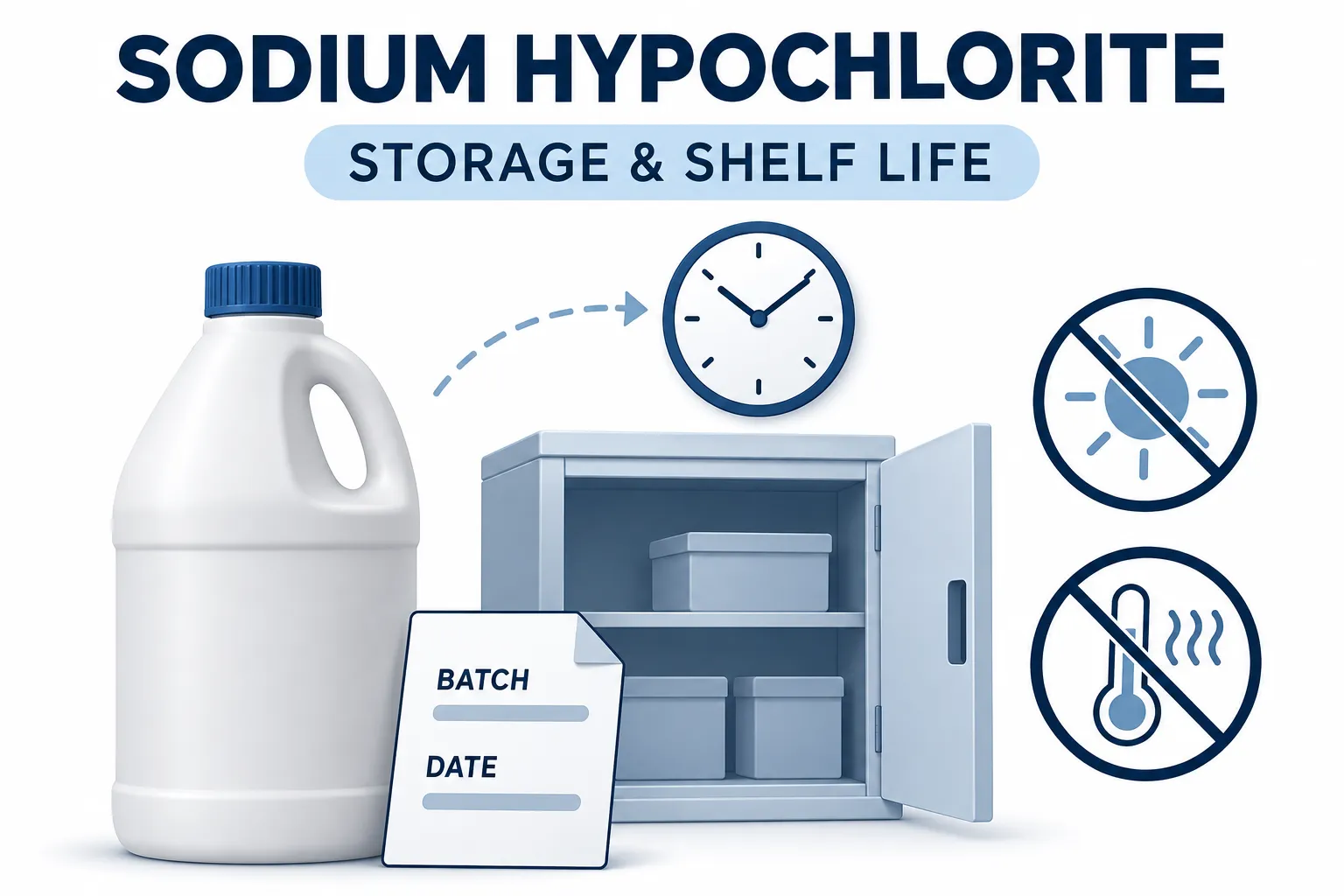
AI concept illustration of sodium hypochlorite storage and batch management, not an actual package, storage validation or shelf-life claim.
Yes. A sodium hypochlorite solution does not remain unchanged indefinitely after it is prepared: its available chlorine can decline during storage. Technical guidance from Australia’s National Health and Medical Research Council (NHMRC) identifies temperature, storage time, impurities and light as factors affecting stability. Storage conditions and periods of use also deserve attention for 84 bleach disinfectants whose principal active ingredient is sodium hypochlorite.Australia NHMRC: Sodium Hypochlorite
To decide whether a disinfectant is still suitable for use, consider its product dates, storage history and current condition together. Liquid remaining in the bottle, or a smell that is still noticeable, cannot replace that information.
First, Distinguish Unopened Stock, Opened Stock and Diluted Solution
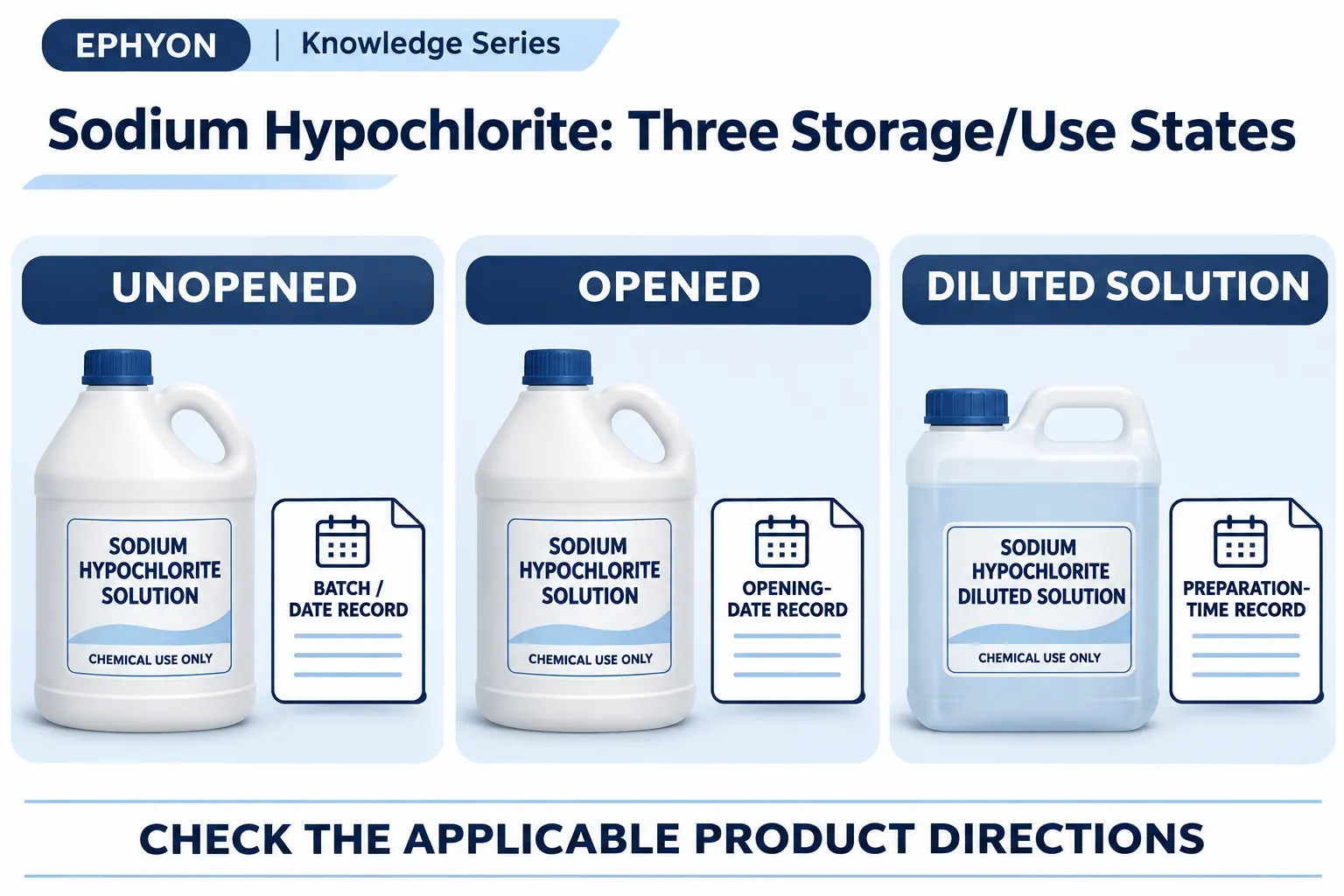
Before discussing shelf life, establish the state of the product you have. The expiry date of a manufacturer’s original product must be understood together with the storage conditions on its label. For an opened product, also check the instructions for management after opening. A working solution prepared by dilution requires a separate check of how long it may be used.
| Product state | Information to check |
|---|---|
| Unopened product in its original packaging | Production batch, expiry date, packaging integrity and specified storage conditions |
| Opened product in its original packaging | Label requirements after opening, together with actual storage and dispensing conditions |
| Working solution diluted as directed | Preparation time, applicable use concentration and permitted period of use |
The expiry date printed on the stock product’s bottle cannot simply become the use-by date of a bucket of diluted solution. In its guidance on household surface disinfection with bleach, the US CDC recommends preparing a fresh diluted solution daily. This recommendation applies to the household uses addressed by that guidance; it does not mean every finished sodium hypochlorite product has the same diluted-solution lifetime.US CDC: Cleaning and Disinfecting with Bleach
Why Do Storage Conditions Affect Available Chlorine?
Sodium hypochlorite can decompose during storage, gradually reducing its available chlorine. Factors including light, higher temperatures and storage time affect its stability. Results obtained at one concentration under one set of experimental conditions cannot be applied directly to all household or commercial finished products.Australia NHMRC: Sodium Hypochlorite
This also means that purchasing decisions should consider actual consumption as well as the quantity delivered at once. Where consumption is modest, an appropriate pack size and the ability to use the opened product promptly as directed often deserve more discussion than simply choosing a larger container. This purchasing suggestion follows from the material’s storage characteristics; specific arrangements should still be confirmed with the supplier.
Put Storage Management into Practice: Location, Packaging and Records
The Canadian Centre for Occupational Health and Safety (CCOHS) recommends keeping household chlorine bleach in a secure, cool, dry location, away from direct sunlight and heat sources and out of children’s reach. Container labels should remain clearly legible, and the directions for use and requirements in the safety data sheet should be followed.Canada CCOHS: Bleach—Working Safely
- Location: choose a storage area that meets label requirements, avoiding sunny windows and nearby heat sources.
- Packaging: retain the original container and label, manage the closure as directed, and do not casually transfer the product into beverage bottles.
- Records: where working solutions are prepared, record preparation time and intended use where appropriate, and manage leftover solution according to the directions.
If a decanted solution has an unclear source, no legible label or an unconfirmed storage history, first check with the supplier. Do not try to compensate for an unknown change in concentration by “adding a little more.” Increasing the amount does not automatically resolve uncertainty about the product’s condition.
Include Storage Requirements in Product Development and Purchasing
The handled-pack sodium hypochlorite disinfectant concept and retail-bottle 84 bleach concept displayed on the EPHYON website offer two packaging development directions. For brand and distribution customers, we suggest confirming pack capacity, container and closure compatibility, expected stock turnover, and storage and transport conditions alongside the intended use and available chlorine requirements.EPHYON: Sodium Hypochlorite Disinfectant—Handled-Pack Concept · EPHYON: 84 Bleach Disinfectant—Retail-Bottle Concept
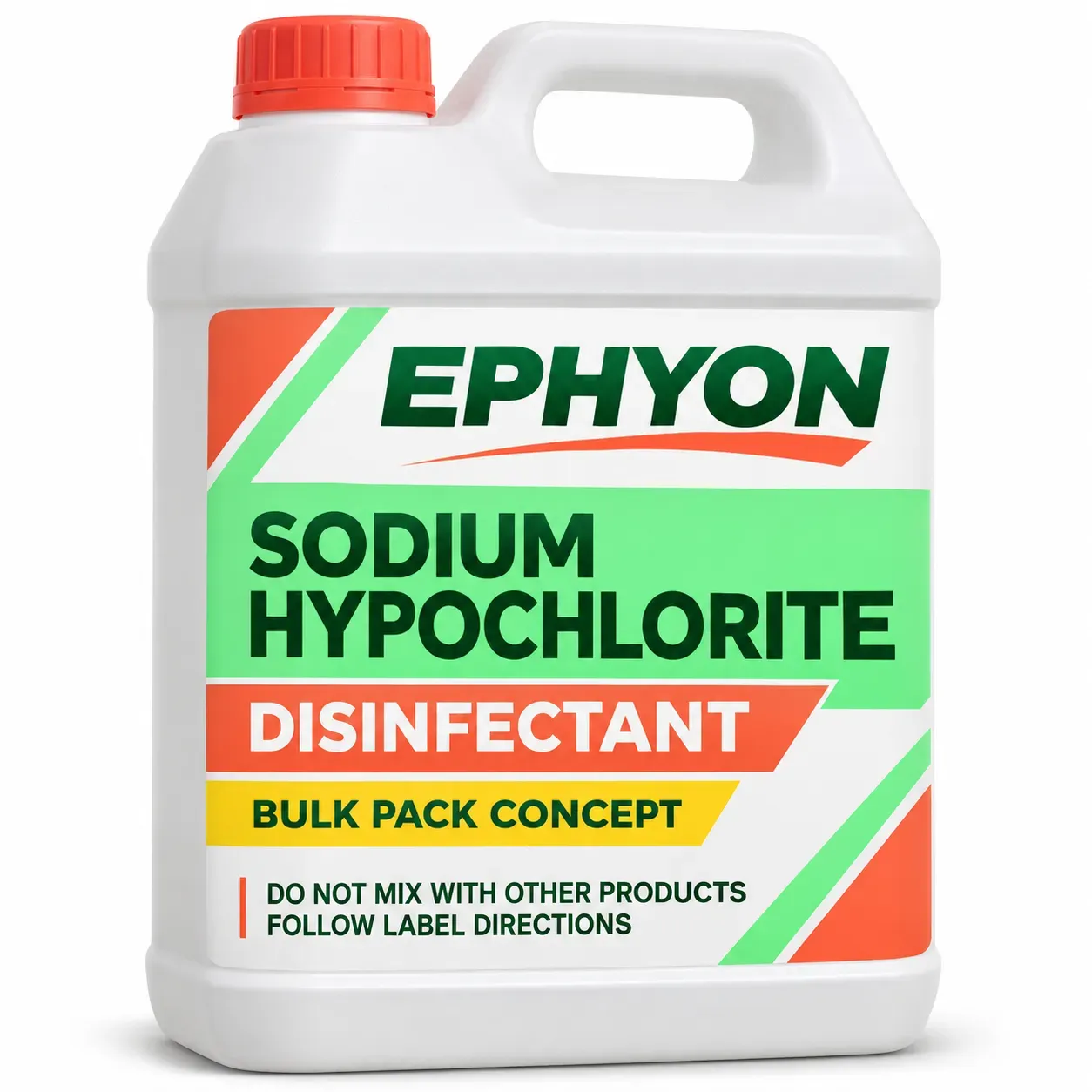
These pages present development concepts. Specific available chlorine specifications, shelf life and requirements after opening must be confirmed against the actual product and its documentation. Customers considering OEM or ODM cooperation can share their target market, application, expected consumption and packaging requirements to connect product planning more effectively with subsequent use and management.
Related reading
- What Is Sodium Hypochlorite Used For? Choosing Dilution and Methods for Floors and Mold
- How to Use 84 Bleach: Dilution, Contact Time and Common Mistakes
References and original sources
- Australia NHMRC: Sodium Hypochlorite
https://guidelines.nhmrc.gov.au/australian-drinking-water-guidelines/part-5/treatment-chemicals/sodium-hypochlorite - US CDC: Cleaning and Disinfecting with Bleach
https://www.cdc.gov/hygiene/about/cleaning-and-disinfecting-with-bleach.html - Canada CCOHS: Bleach—Working Safely
https://www.ccohs.ca/oshanswers/chemicals/bleach.html - EPHYON: Sodium Hypochlorite Disinfectant—Handled-Pack Concept
https://www.ephyon.com/en/product/detail/sodium-hypochlorite-disinfectant-handled-pack/ - EPHYON: 84 Bleach Disinfectant—Retail-Bottle Concept
https://www.ephyon.com/en/product/detail/84-bleach-disinfectant-retail-bottle/
Manufacturing Support · OEM / ODM
Need custom product development or manufacturing?
Our dual production bases provide ODM development and OEM manufacturing for household cleaning products, with solutions tailored to your formulation, packaging, and delivery requirements.