How to Use 84 Bleach: Dilution, Contact Time and Common Mistakes
Check intended uses, dilution and contact time before using 84 bleach. Learn about cleaning, incompatible mixtures and material precautions.
On this page
- Assess the need: cleaning and disinfection have different jobs
- Check three conditions before dilution
- Is wiping enough? Contact time matters
- Do not mix cleaning products to make them stronger
- Check the material to avoid damage
- Storage deserves care after use
- From a retail-bottle proposal to clear product directions
- References and original sources
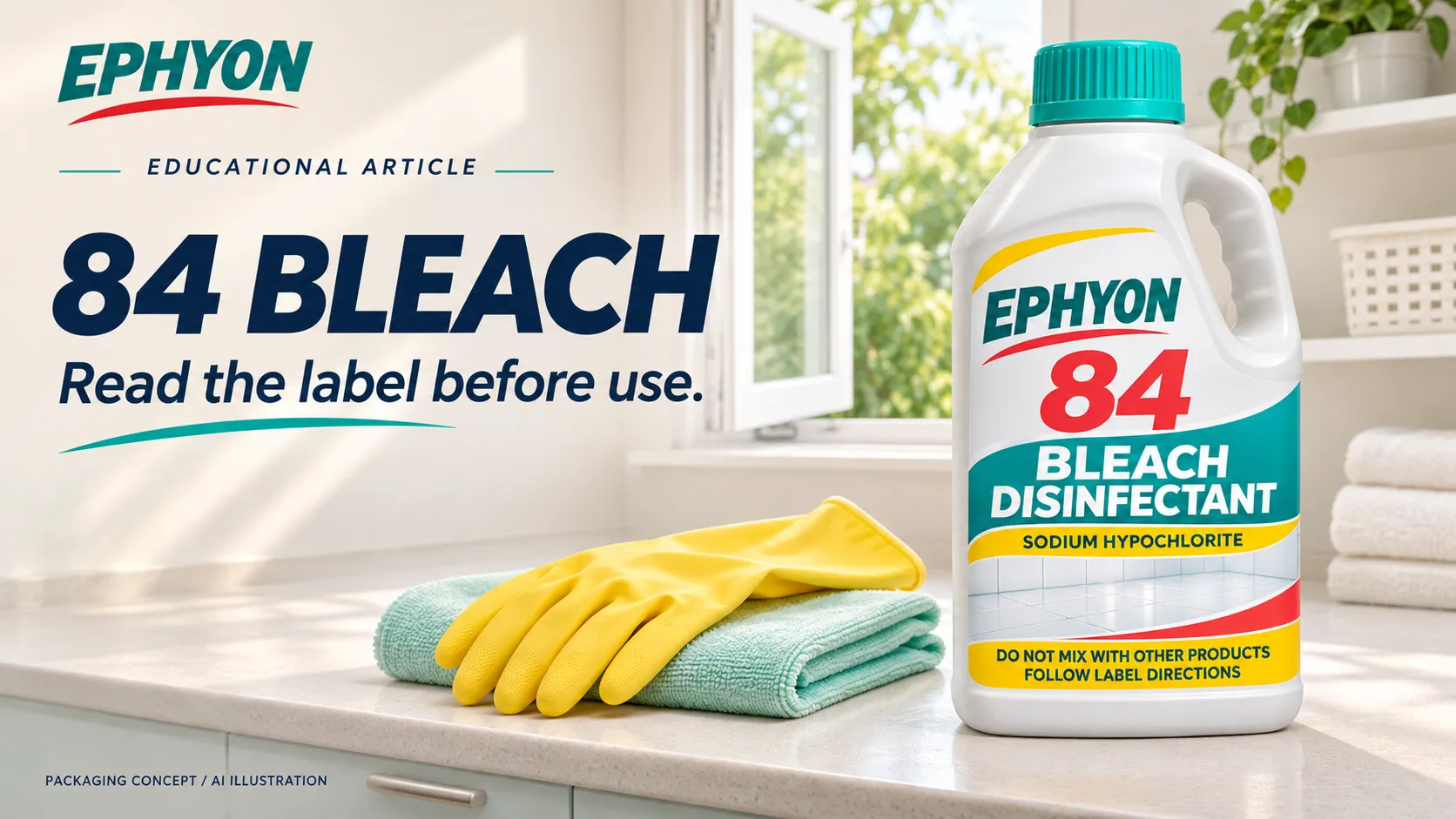
AI-generated packaging concept based on EPHYON’s retail-bottle proposal. Final specifications and directions are subject to the finished product label.
84 disinfectant, commonly called 84 bleach, is a familiar chlorine-based cleaning product in China. In use, however, questions about how much water to add, how long to wait after wiping and whether it can be combined with toilet cleaner matter more than recognizing the name.
Start with the label on the actual bottle. Specifications and intended uses can differ. A dilution slogan detached from the product cannot replace complete directions.
Assess the need: cleaning and disinfection have different jobs
The US CDC notes that, in most everyday household situations, cleaning surfaces with soap or detergent removes most germs. Further disinfection may be needed when someone at home is ill. Decide according to the situation. US CDC: Cleaning and Disinfecting with Bleach
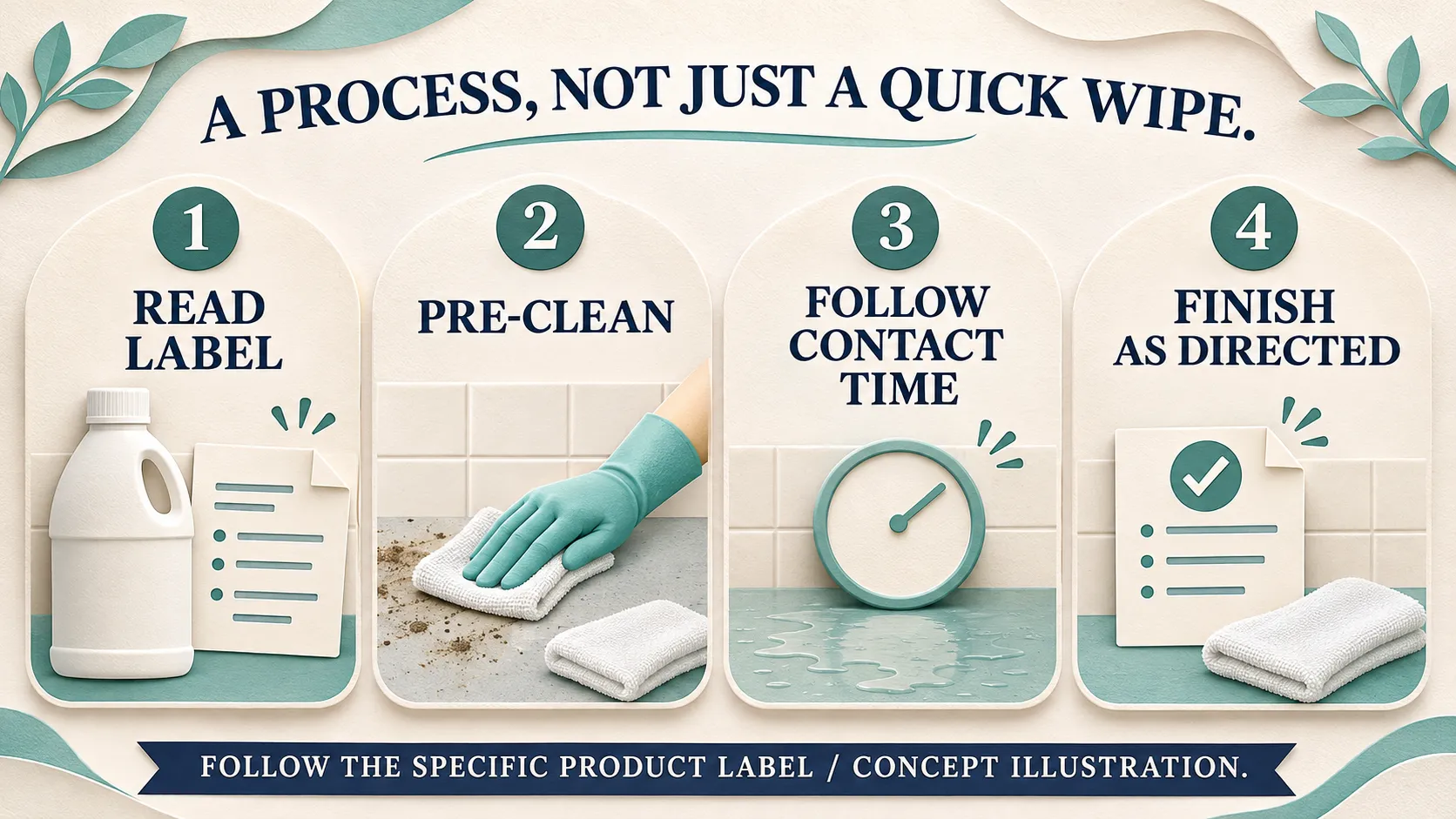
Cleaning removes surface dirt; disinfection has its own treatment requirements. When disinfection is needed, remove visible soil first and then follow the disinfectant directions. Increasing the amount does not replace this step. US CDC: Cleaning and Disinfecting with Bleach
Check three conditions before dilution
First, does the label permit the intended object or surface? Second, what dilution or preparation does it require? Third, what contact time is needed? Read intended use, preparation and contact time together. China National Health Commission: Guidelines for the Use of Disinfectants (2020)
Do not copy another bottle’s ratio simply because both are called 84. Do not estimate with a few capfuls per basin without knowing the cap’s volume. Ask the supplier if directions are incomplete, and use suitable measuring equipment as directed.
Is wiping enough? Contact time matters
A disinfectant must meet the contact time on its label. The US EPA emphasizes keeping a surface visibly wet throughout the specified contact time to meet the corresponding product directions. US EPA: Selected EPA-Registered Disinfectants
Wiping a surface dry immediately after application may interrupt the required process. After the contact time, whether to wipe or rinse with clean water depends on the product directions and the object being treated. One finishing method does not fit every surface.
Do not mix cleaning products to make them stronger
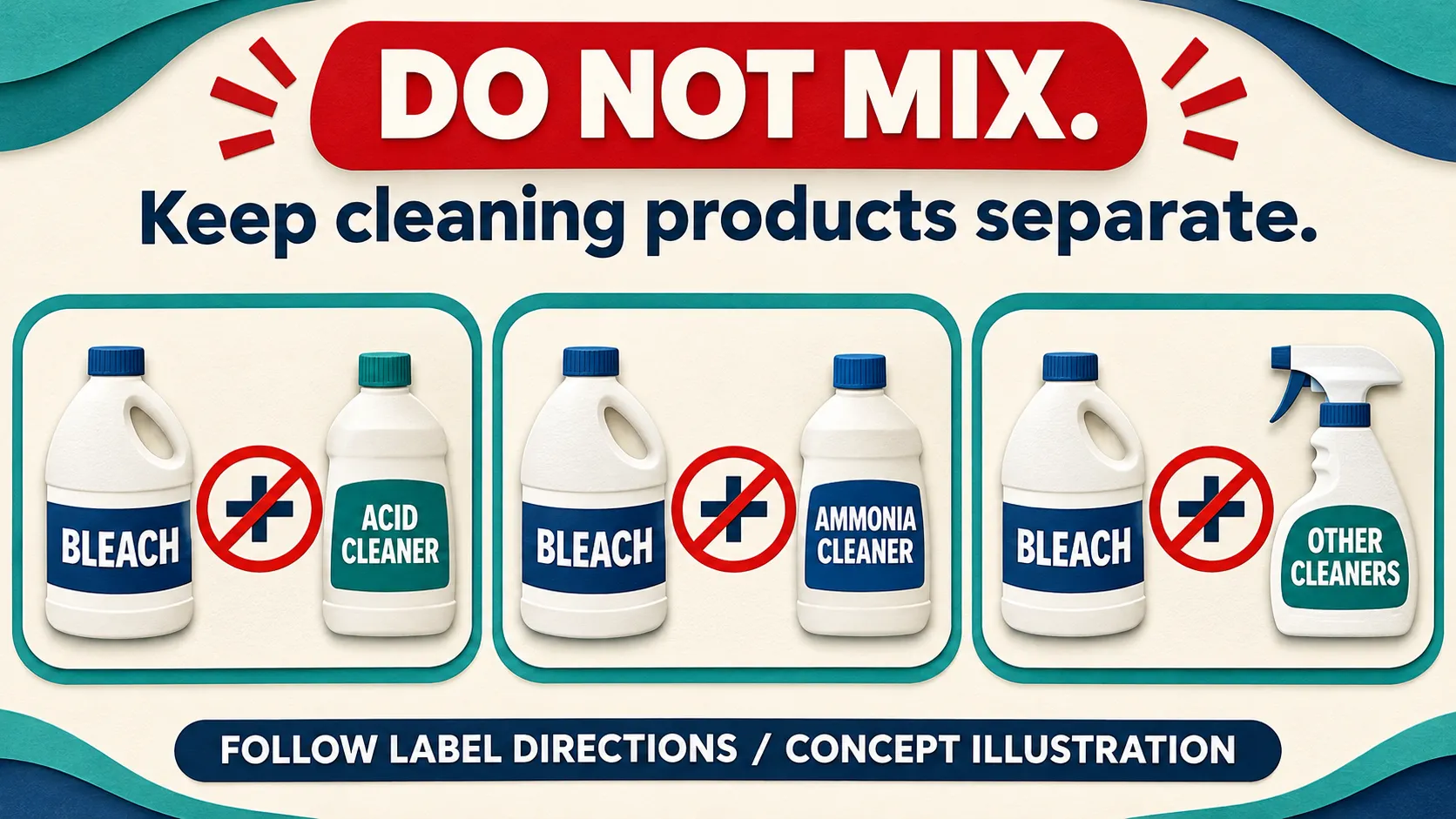
Never mix 84 bleach with acidic cleaners, ammonia-containing products or other cleaning products. Health Canada warns that mixing can release harmful gases. Toilet cleaners and descalers cannot be combined with bleach simply because both are cleaning products. Health Canada: Use Household Chemicals Safely
Choose a product suited to the task and complete the process as directed. Ventilate during use, wear gloves and other protection specified by the label, and do not apply surface disinfectants to people or pets. US CDC: When and How to Clean and Disinfect a Facility
Check the material to avoid damage
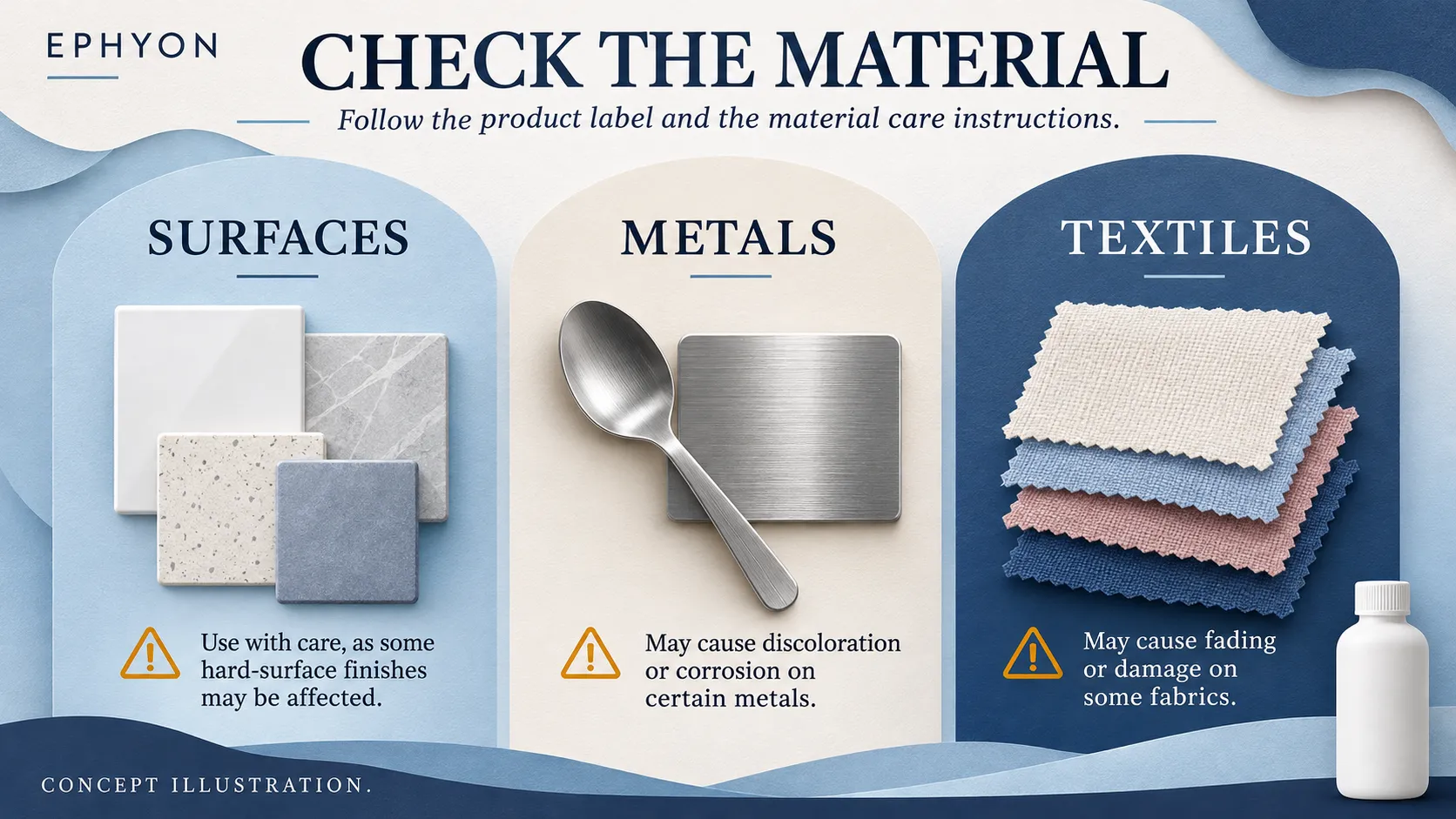
Chlorine-based disinfectants can corrode metals and bleach textiles. Check both the product’s intended uses and the care instructions for the object before applying. China National Health Commission: Guidelines for the Use of Disinfectants (2020)
Metal fittings, colored clothing and special coatings need particular care. Being in the same kitchen or bathroom does not make every material suitable for the same disinfectant. A small spot test cannot replace the label’s intended uses and restrictions.
Storage deserves care after use
Keep the original container and label, close it as directed and store out of children’s and pets’ reach under the labeled conditions. Do not decant disinfectant into drink bottles or give someone an unlabeled portion without directions. Health Canada: Use Household Chemicals Safely
From a retail-bottle proposal to clear product directions
EPHYON’s 84 Bleach Disinfectant | Retail-Bottle Proposal offers a packaging-development reference. It is a packaging proposal: capacity, available chlorine specification, intended uses and directions must each be confirmed during development. EPHYON: 84 Bleach Disinfectant | Retail-Bottle Proposal
For private-label clients, discussion should extend beyond the bottle and label appearance. Target users, the objects to be treated, how users measure the product, label languages and target-market documentation should all be part of the project.
Clear directions are part of product service. Through specific discussions, we aim to align packaging, specifications and use information, helping customers develop products that are understandable and can be used correctly.
References and original sources
US CDC: Cleaning and Disinfecting with Bleach
https://www.cdc.gov/hygiene/about/cleaning-and-disinfecting-with-bleach.html
China National Health Commission: Guidelines for the Use of Disinfectants (2020)
https://zwfw.nhc.gov.cn/kzx/tzgg/lyxclxgyhxhxwzscdsjyyswsaqcpdsp_261/202101/t20210118_2030.html
US EPA: Selected EPA-Registered Disinfectants
https://www.epa.gov/pesticide-registration/selected-epa-registered-disinfectants
Health Canada: Use Household Chemicals Safely
https://www.canada.ca/en/health-canada/services/home-safety/household-chemical-safety.html
US CDC: When and How to Clean and Disinfect a Facility
https://www.cdc.gov/hygiene/about/when-and-how-to-clean-and-disinfect-a-facility.html
EPHYON: 84 Bleach Disinfectant | Retail-Bottle Proposal
https://www.ephyon.com/en/product/detail/84-bleach-disinfectant-retail-bottle/
Sources checked on 10 November 2026. Historical and overseas guidance retains its original context; it does not imply EPHYON registration, endorsement or validation for every use described.
Manufacturing Support · OEM / ODM
Need custom product development or manufacturing?
Our dual production bases provide ODM development and OEM manufacturing for household cleaning products, with solutions tailored to your formulation, packaging, and delivery requirements.