Sodium Hypochlorite vs Hypochlorous Acid: Choose a Disinfectant by Its Intended Use
Sodium hypochlorite and hypochlorous acid have similar names, but their chemical identities and finished-product directions are not interchangeable. Understand their relationship in water, then compare intended uses, specifications and contact times.
On this page
- Different Names, Related Chemistry in Water
- Diluting 84 Bleach Does Not Create a Different Hypochlorous Acid Product
- Compare Four Key Details When Choosing Disinfectants
- A Surface Disinfectant’s Name Does Not Authorize Use on the Body
- From Ingredient Comparisons to a Product Plan That Fits the Need
- Related reading
- References and original sources
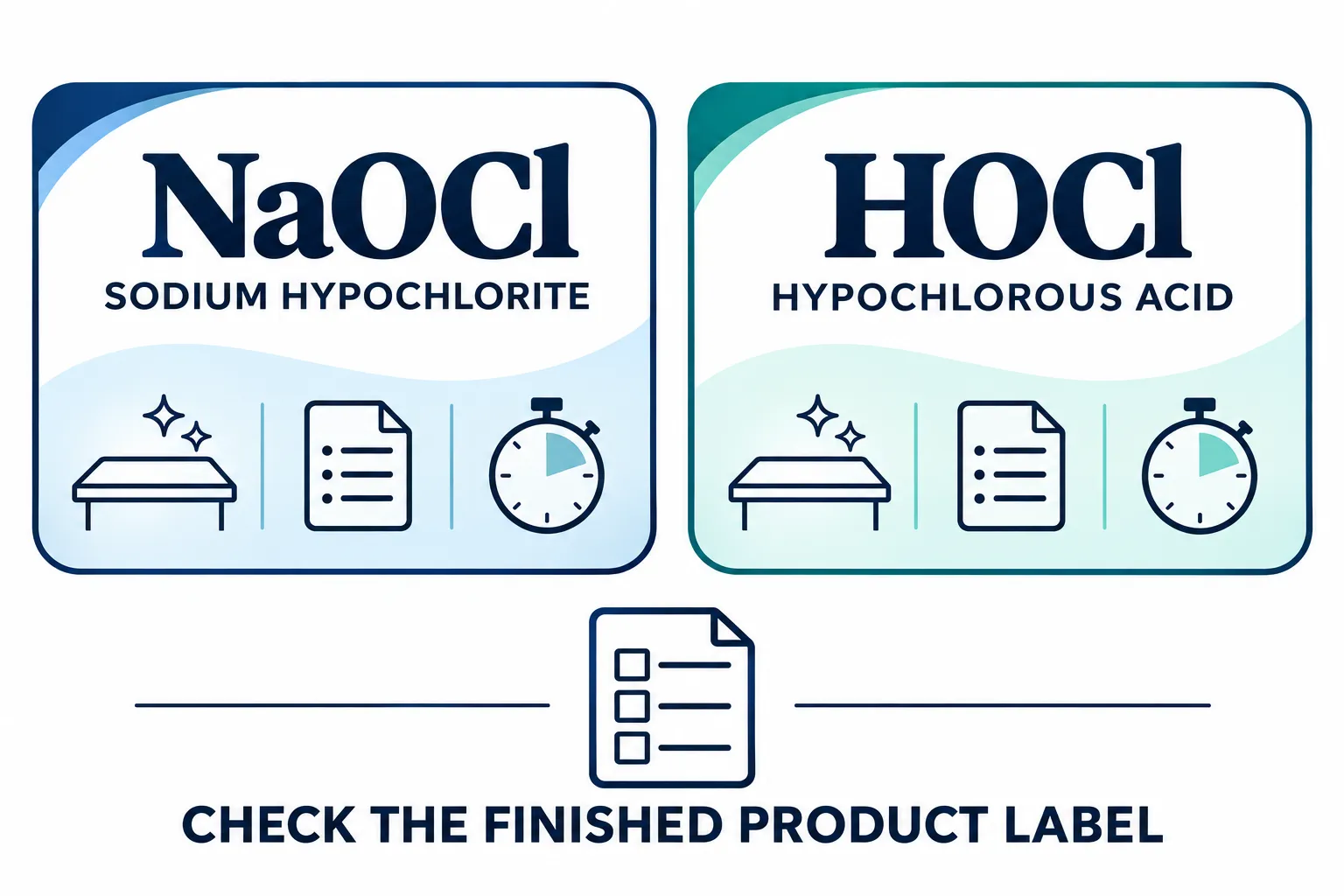
AI concept illustration comparing product information for sodium hypochlorite and hypochlorous acid. It does not imply interchangeable uses or equivalent performance.
Sodium hypochlorite and hypochlorous acid are different chemical substances, although their disinfection chemistry in aqueous solution is related. Buyers should not substitute one product for another merely because the names sound similar, or conclude that one is always better without considering the actual products.
For household and commercial surface disinfection, the practical questions are whether a product is suitable for the intended object, how its directions require it to be used, and what evidence supports its performance under those conditions. Answering these questions at finished-product level is more useful than comparing ingredient names alone.
Different Names, Related Chemistry in Water
The chemical formula of sodium hypochlorite is NaOCl; that of hypochlorous acid is HOCl. Common 84 bleach disinfectants use sodium hypochlorite as their principal active ingredient. However, 84 bleach is a formulated product, not another name for “pure sodium hypochlorite.”Canada CCOHS: Bleach—Working Safely
In aqueous solution, hypochlorous acid (HOCl) and the hypochlorite ion (OCl⁻) exist in a pH-dependent equilibrium. The US CDC’s guidance on chemical disinfectants explains that this relationship affects chlorine’s microbicidal action. Understanding the difference therefore requires both distinguishing the names and considering the solution conditions.US CDC: Chemical Disinfectants
This chemical relationship does not establish a ranking of commercial finished products. Suitability still depends on the product’s concentration, formulation, contact time and actual application.
Diluting 84 Bleach Does Not Create a Different Hypochlorous Acid Product
Diluting a product as directed completes the preparation specified for that original product. It does not mean you have manufactured a different hypochlorous acid disinfectant with its own intended uses, stability and directions. Adding water does not remove the need to follow the original product instructions.
Likewise, never add vinegar, citric acid, toilet cleaner or other acidic substances to 84 bleach or sodium hypochlorite solution in an attempt to change its pH. Mixing hypochlorites with acids can release toxic chlorine gas. This chemistry explanation is intended to clarify ingredients, not to provide a home preparation method.US CDC: Chemical Disinfectants
Compare Four Key Details When Choosing Disinfectants
The US EPA’s guidance on surface disinfectant labels identifies use sites, directions and contact time as important information. The following questions help consumers and professional buyers compare products in relation to their actual needs.US EPA: Selected EPA-Registered Disinfectants
| Item to check | Question to answer |
|---|---|
| Intended object or surface | Does the label explicitly permit use on the target surface and material? |
| Specification | Is the stated figure active ingredient content or available chlorine? Are the units and reporting basis comparable? |
| Directions for use | Is the product ready to use or does it require dilution? Is pre-cleaning or subsequent rinsing required? |
| Contact time | How long must it act for the intended use, and must the surface remain wet during that time according to the directions? |
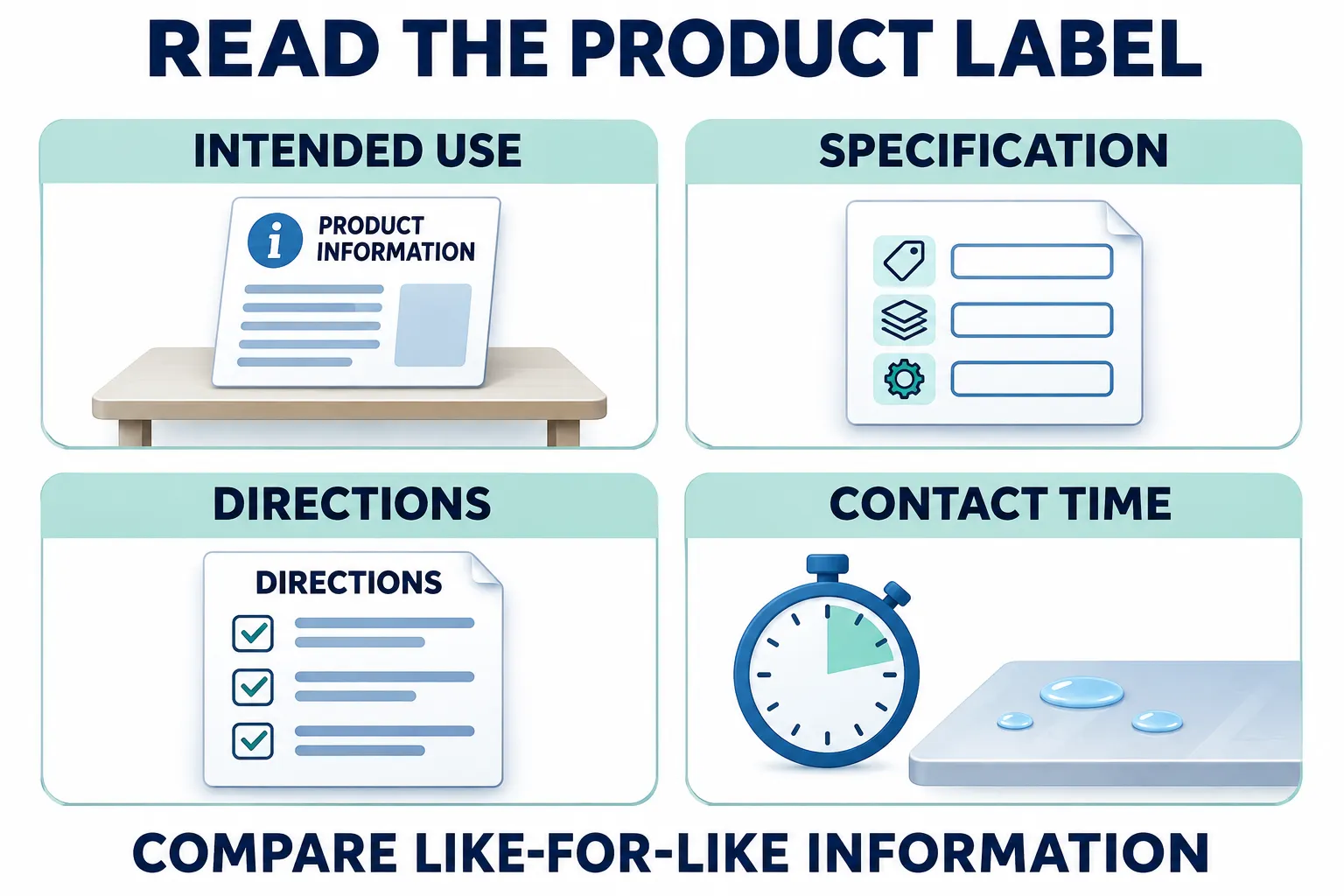
Even when two products show a concentration figure, first establish what each figure represents. Active ingredient content and available chlorine are not label figures that can be compared directly without checking their reporting basis. Similarly, a claim of “fast action” without corresponding use conditions offers little basis for deciding whether a product meets your needs.Sodium Hypochlorite Product Label Listed by the US EPA: An Example of Specification Reporting
A Surface Disinfectant’s Name Does Not Authorize Use on the Body
The presence of “hypochlorous acid” in a name does not automatically mean a particular product can be sprayed onto skin, food or pets. The EPA distinguishes environmental surface disinfectants from products for use on people: surface disinfectants should not be applied directly to people or food. Its guidance also makes clear that this category does not cover separately regulated products intended for use on people.US EPA: Distinguishing Surface Disinfectants from Products for Use on People
When choosing a household surface disinfectant, first confirm its permitted scope as that type of finished product. A mild smell, a spray nozzle or a chemical name in the description cannot replace clear directions on intended use.
From Ingredient Comparisons to a Product Plan That Fits the Need
The EPHYON website displays handled-pack and retail-bottle development concepts with sodium hypochlorite as the principal active ingredient, helping customers discuss packaging and product requirements for their applications. Specific specifications and permitted uses are confirmed against the actual product documentation.EPHYON: Sodium Hypochlorite Disinfectant—Handled-Pack Concept · EPHYON: 84 Bleach Disinfectant—Retail-Bottle Concept
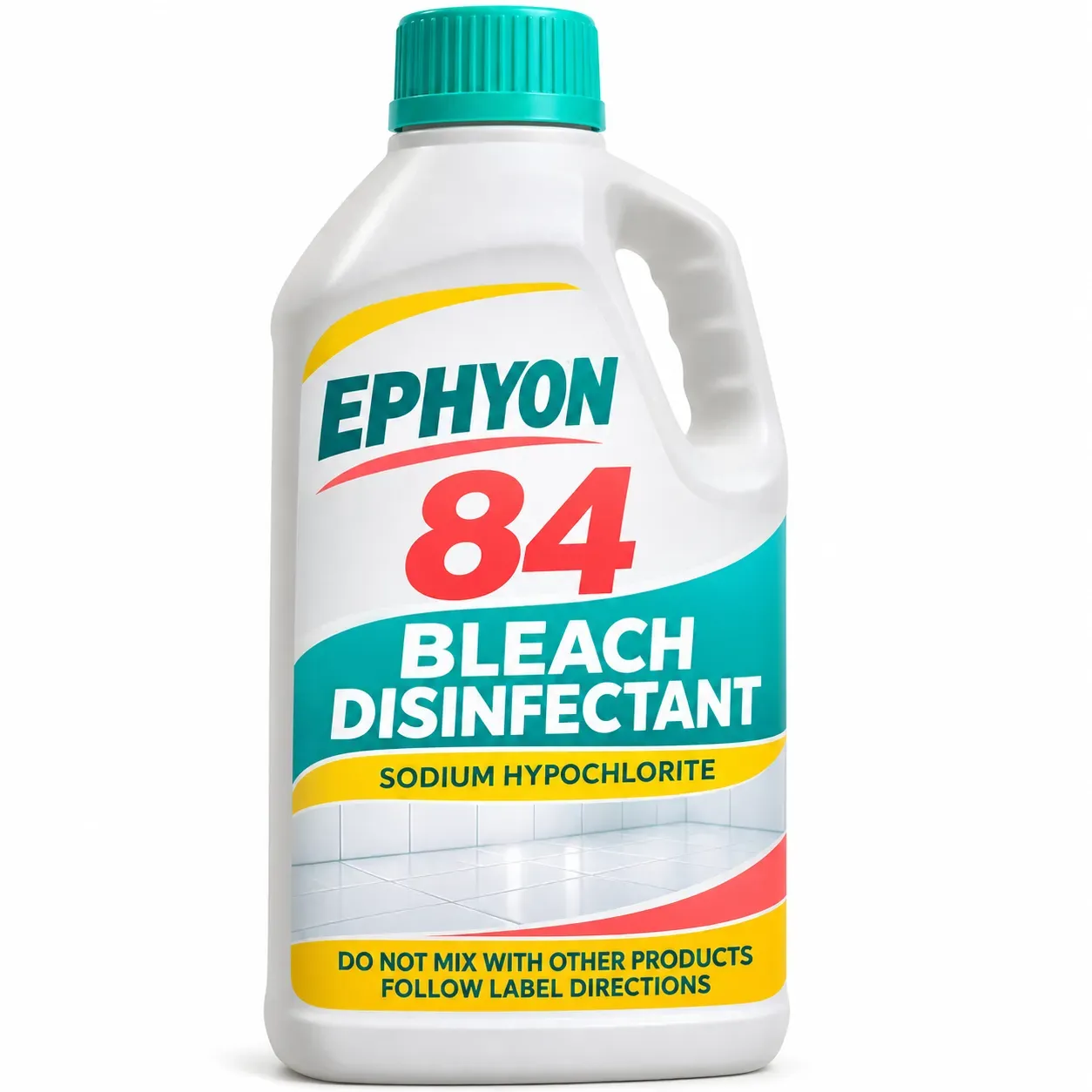
For brand owners, distributors and professional buyers, we aim to understand the target market, intended objects or surfaces, packaging specifications and required documentation before discussing an appropriate OEM or ODM direction. Specifications, permitted uses and directions for each finished product should be confirmed item by item within the project.
Related reading
- What Is Sodium Hypochlorite Used For? Choosing Dilution and Methods for Floors and Mold
- How to Use 84 Bleach: Dilution, Contact Time and Common Mistakes
References and original sources
- Canada CCOHS: Bleach—Working Safely
https://www.ccohs.ca/oshanswers/chemicals/bleach.html - US CDC: Chemical Disinfectants
https://www.cdc.gov/infection-control/hcp/disinfection-sterilization/chemical-disinfectants.html - US EPA: Selected EPA-Registered Disinfectants
https://www.epa.gov/pesticide-registration/selected-epa-registered-disinfectants - Sodium Hypochlorite Product Label Listed by the US EPA: An Example of Specification Reporting
https://www3.epa.gov/pesticides/chem_search/ppls/035317-20001-20260126.pdf - US EPA: Distinguishing Surface Disinfectants from Products for Use on People
https://www.epa.gov/coronavirus-and-disinfectants/are-disinfectants-harmful-children-can-children-apply-disinfectants - EPHYON: Sodium Hypochlorite Disinfectant—Handled-Pack Concept
https://www.ephyon.com/en/product/detail/sodium-hypochlorite-disinfectant-handled-pack/ - EPHYON: 84 Bleach Disinfectant—Retail-Bottle Concept
https://www.ephyon.com/en/product/detail/84-bleach-disinfectant-retail-bottle/
Manufacturing Support · OEM / ODM
Need custom product development or manufacturing?
Our dual production bases provide ODM development and OEM manufacturing for household cleaning products, with solutions tailored to your formulation, packaging, and delivery requirements.