Can Soaking Powder Remove Yellow Marks? Collars, Underarms and Stored White Clothes
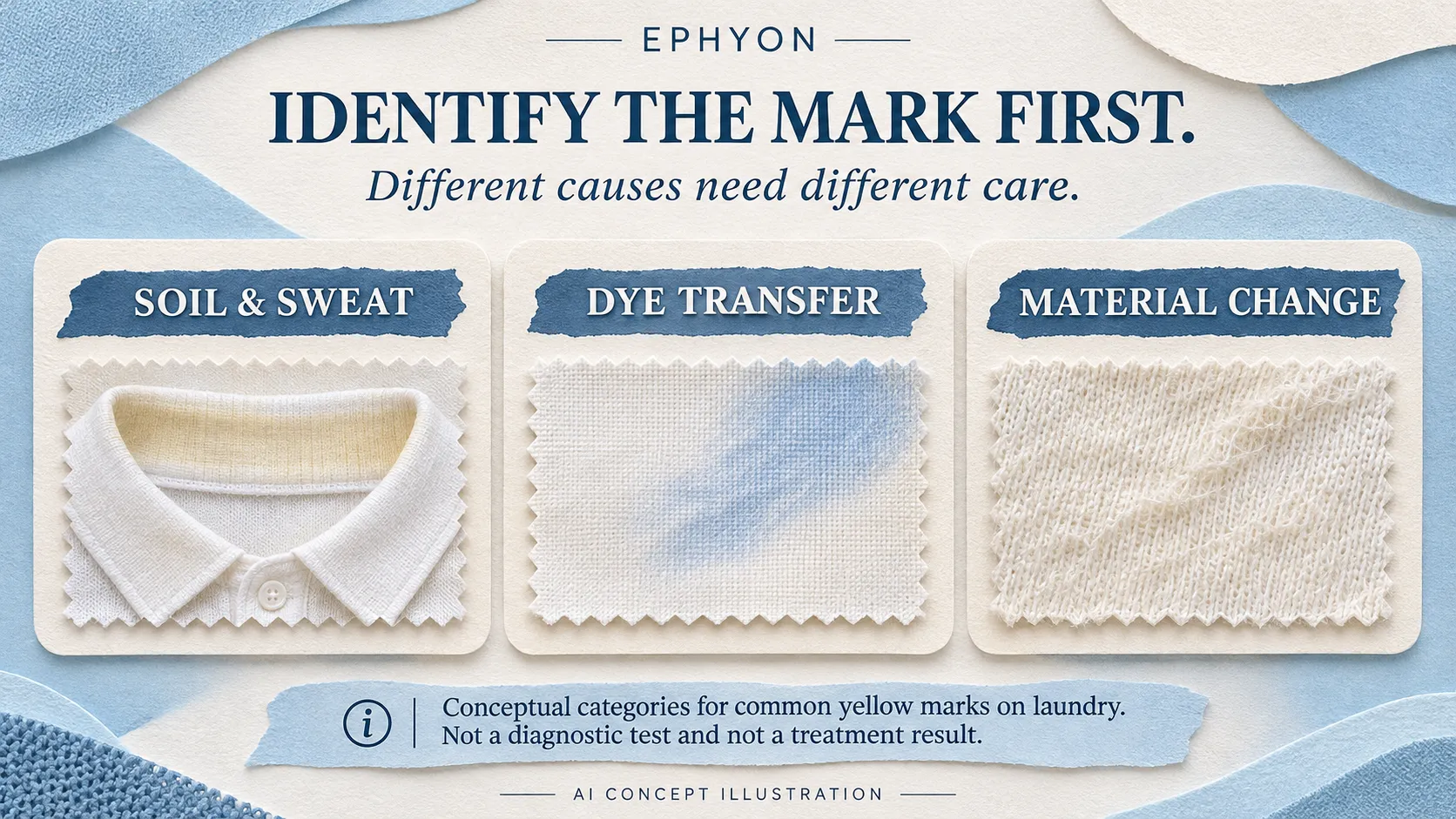
Yellowing has different causes. Distinguish removable soil, dye transfer and material changes before choosing a soaking treatment, rather than simply adding more powder or extending the soak.

On this page
- Similar-looking yellow marks can have different causes
- Collars and underarms: examine the local problem first
- Dull whites after storage: review the earlier washing routine too
- White does not mean bleach-safe, and foam is not proof of cleaning
- Understand a soaking product through a garment’s actual needs
- References and original sources
AI-generated editorial illustration, not a product photograph or performance test. Follow the current label.
A yellow ring around a collar, recurring underarm marks and white clothes that look dull after storage are familiar laundry problems. Before deciding whether and how to use soaking powder, ask where the discoloration appeared and how the garment was worn and washed.
For removable soil on items within the product’s intended uses, soaking can be part of a care routine. Dye transfer, fiber damage and ordinary dirt are different problems: not all yellowing can be washed away by soaking longer.
Similar-looking yellow marks can have different causes
The American Cleaning Institute (ACI) discusses yellowing from body-soil buildup, fabric discoloration and yellow or brown spots separately in its laundry guide. Similar colors therefore do not necessarily call for the same treatment. American Cleaning Institute: Laundering Problems & Solutions
Consider three clues. Are marks concentrated on the collar, cuffs or underarms, or is the whole garment dull? Did they develop during wear, or appear suddenly after washing with colored items? Besides color, is the fabric thinner, less elastic or damaged? These clues do not replace professional assessment, but help avoid blind treatment.
Collars and underarms: examine the local problem first
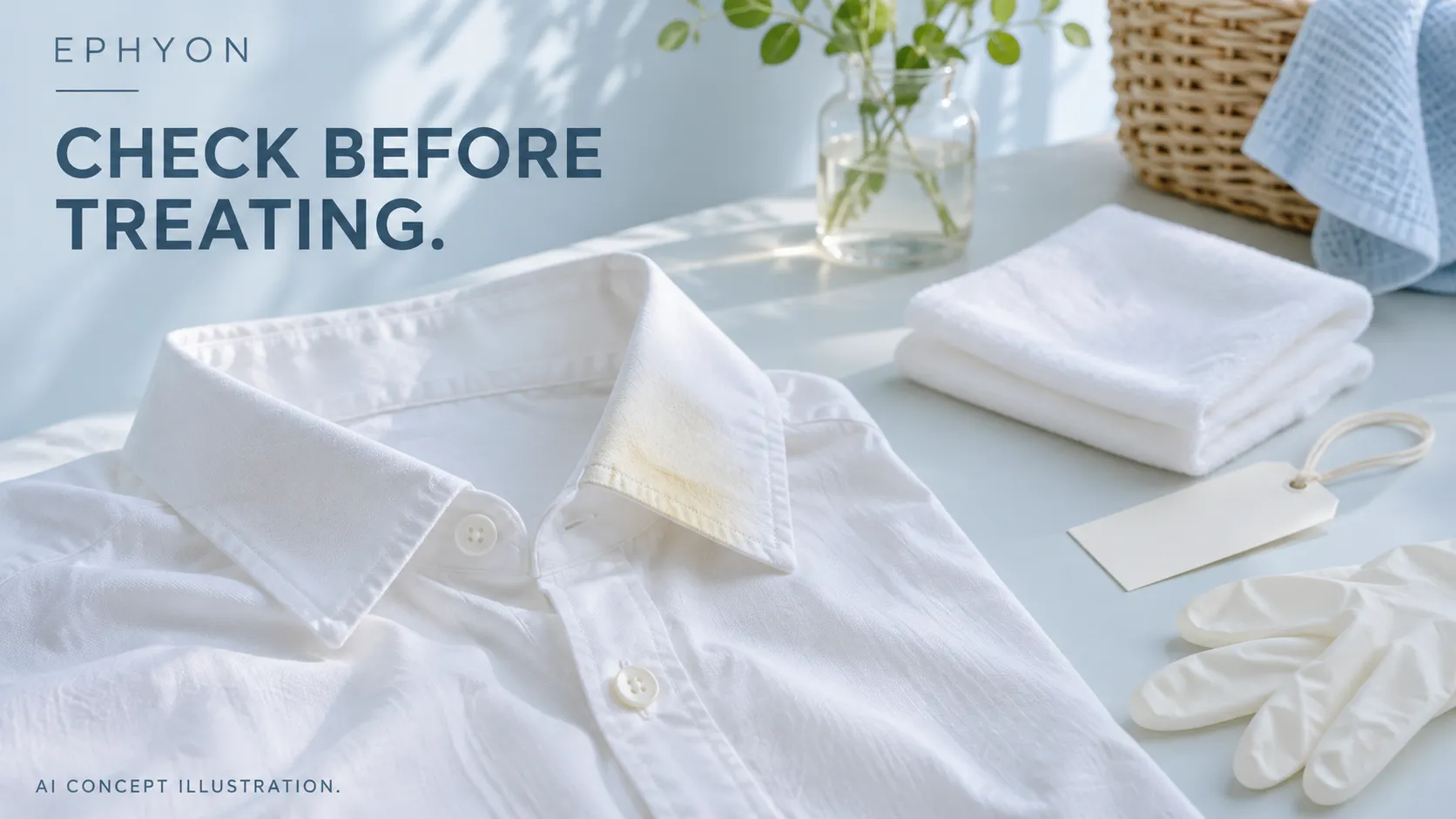
Treat areas frequently exposed to perspiration promptly and select a method consistent with the care label. University of Georgia Extension advises reading the care label before treating perspiration stains and checking an inconspicuous area for colorfastness. University of Georgia Extension: Perspiration Stains
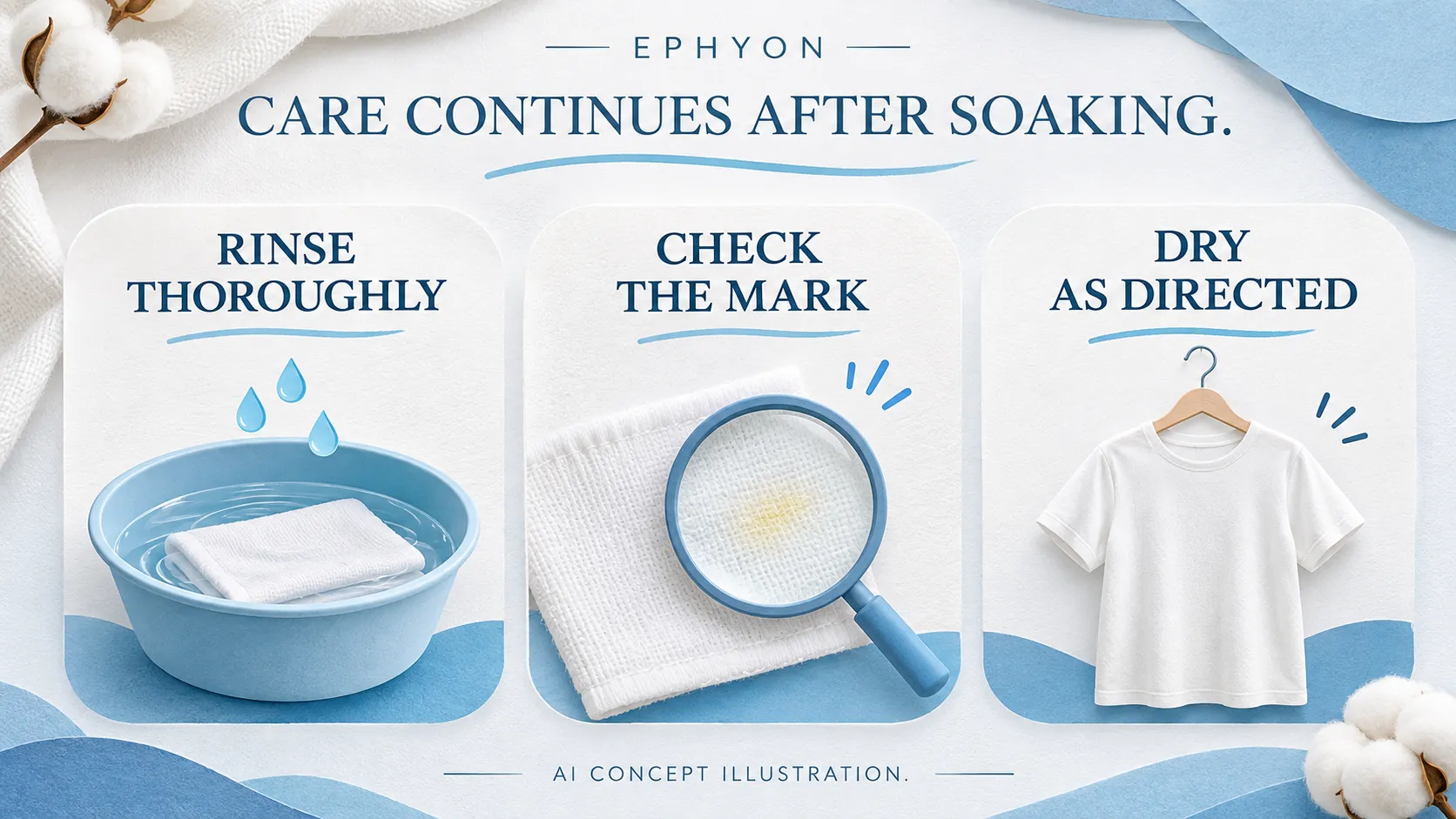
If both garment and product directions permit, use soaking as one stage: measure as labeled, dissolve the powder thoroughly, add the garment and check the stain after the specified conditions are met. Continue with permitted washing and rinsing as needed. Soaking allows a fuller treatment process; it does not remove the need to inspect collars and underarms.
Dull whites after storage: review the earlier washing routine too
Do not immediately blame storage when a white garment looks yellow on removal from the cupboard. Check whether it was clean before storage, whether it was washed with dark items and whether marks were already present.
Whirlpool’s care guidance explains that washing different colors together can transfer dye. Dull whites can also involve oily soil that needs removal. Both can look less white, but need different approaches. Whirlpool: Discolored Clothes and Dye Transfer
Separate affected items from those releasing dye, then choose a suitable treatment for the garment’s original color and care requirements. Do not repeatedly add powder as though transferred dye were ordinary dirt.
White does not mean bleach-safe, and foam is not proof of cleaning
Suitability for soaking also depends on fibers, finishes and trims. GINETEX distinguishes permission for any bleach, oxygen bleach only and no bleach. A white garment’s color does not override these restrictions. GINETEX: Care Symbols
There is no need to aim for the highest pile of foam. New Mexico State University’s laundry guidance notes that excessive detergent can make too many suds and interfere with cleaning. For a specific soaking powder, check labeled dosage, stain condition and completed rinsing rather than judging by foam alone. New Mexico State University: Getting Clothes Clean
Understand a soaking product through a garment’s actual needs
EPHYON’s website presents Bio-Enzyme Soaking Powder in a 320g jar as a laundry-soaking product reference. For an individual garment, both the product’s intended uses and its care instructions must permit the method. Cotton, white or washable alone is not enough. EPHYON: Bio-Enzyme Soaking Powder, 320g
Our product service includes explaining those decisions: when soaking may be appropriate, when another method is needed and how to check afterwards. For brands and channel partners, we welcome discussions about target garments and real care problems, connecting products, packaging and directions with everyday needs.
Related product: EPHYON Bio-Enzyme Soaking Powder
References and original sources
EPHYON: Bio-Enzyme Soaking Powder, 320g
https://www.yipinjing.com/products/bio-enzyme-soaking-powder/
American Cleaning Institute: Laundering Problems & Solutions
https://www.cleaninginstitute.org/cleaning-tips/clothes/laundering-problems-solutions
University of Georgia Extension: Perspiration Stains
https://site.extension.uga.edu/textiles/care/stain-removal/remove-stains-from-perspiration/
Whirlpool: Discolored Clothes and Dye Transfer
GINETEX: Care Symbols
New Mexico State University: Getting Clothes Clean
Product directions and garment or footwear care instructions take precedence over general laundry guidance. Follow the current bottle label for soaking time.
Manufacturing Support · OEM / ODM
Need custom product development or manufacturing?
Our dual production bases provide ODM development and OEM manufacturing for household cleaning products, with solutions tailored to your formulation, packaging, and delivery requirements.