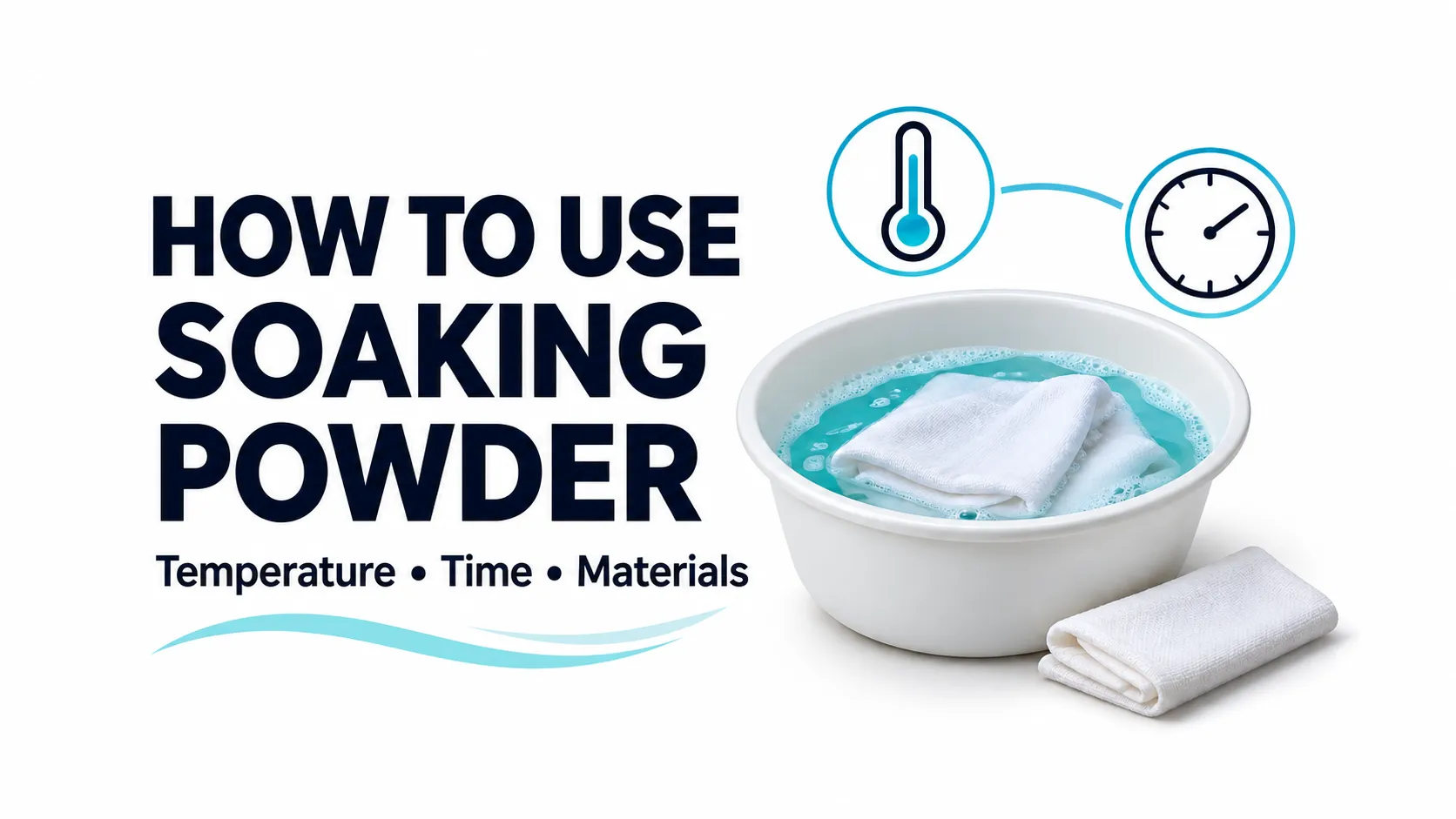
How to Use Soaking Powder: Match Water Temperature, Soaking Time and Materials
Soaking is more than adding powder to hot water. Check materials, dissolve thoroughly, follow the current label’s timing and complete the required rinsing.
On this page
- Step 1: Sort items—washable does not mean suitable for every soak
- Step 2: Match water temperature to both sets of instructions
- Step 3: Dissolve fully before adding the garment
- Step 4: Follow the current label’s time, then inspect and rinse
- Assess shoes separately; soaking powder is not a universal shoe treatment
- Use separately and keep dry: habits after opening matter
- Make directions part of the product experience
- References and original sources
AI-generated editorial illustration, not a product photograph or performance test. Follow the current label.
Soaking powder makes soaking part of everyday laundry care, but dirtiness alone does not determine whether a solution is suitable. Water temperature, complete dissolution, bleaching permission, leather sections and bonded shoe construction can all affect the result.
For EPHYON’s listed Bio-Enzyme Soaking Powder, read the product directions alongside garment or footwear care requirements. Proceed only when both permit the method. EPHYON: Bio-Enzyme Soaking Powder, 320g · American Cleaning Institute: How to Use Bleach
Step 1: Sort items—washable does not mean suitable for every soak
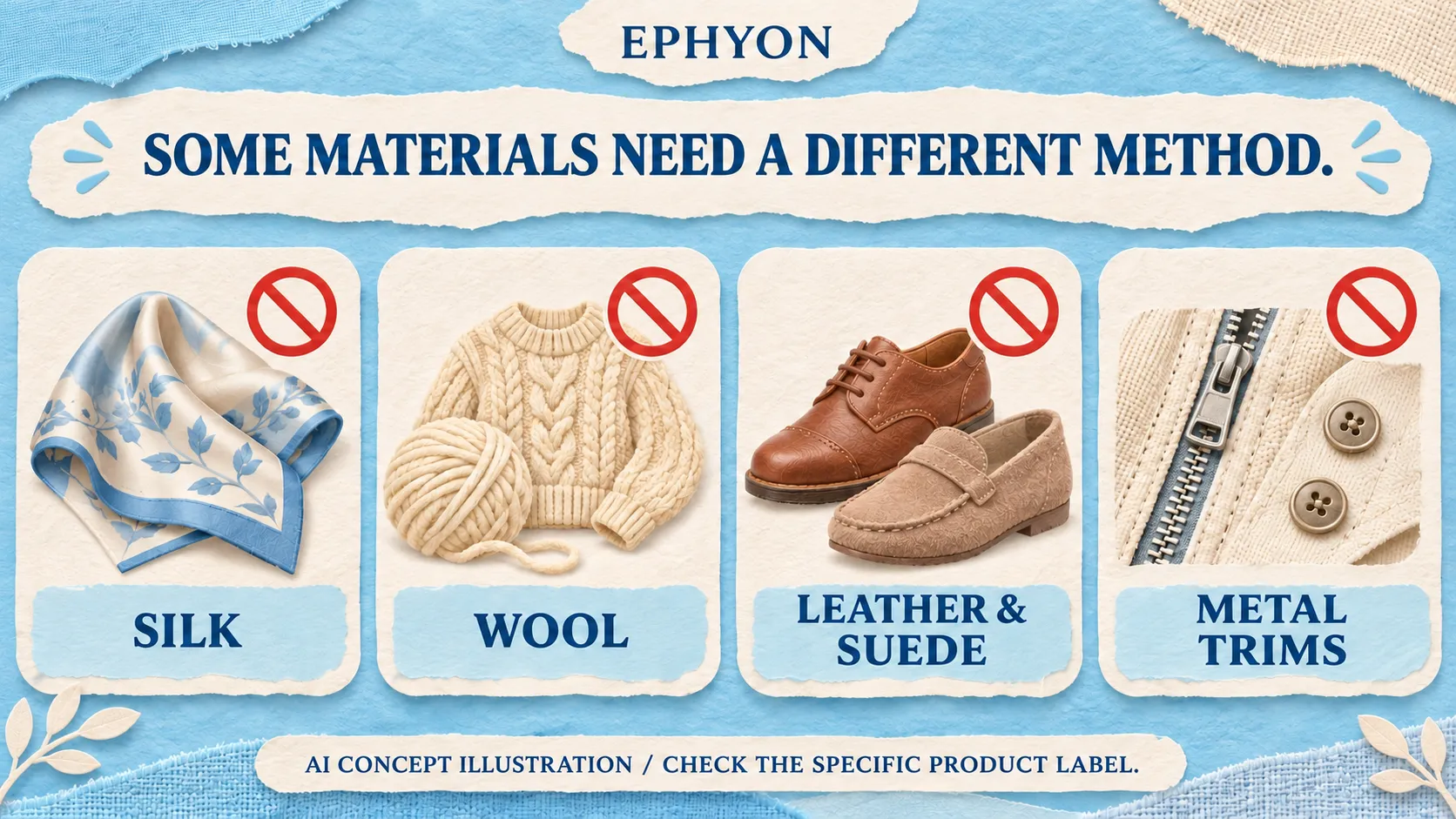
EPHYON’s product guidance excludes silk, wool, elastane, leather and suede, among other materials. It also excludes garments or shoes with leather sections, metal buttons, metal zippers or metal decorations. Assess the whole item, not just the main fabric. EPHYON: Bio-Enzyme Soaking Powder, 320g
A mostly cotton garment may contain elastane. A fabric shoe may also have leather panels, metal buckles or bonded parts. Check each detail instead of deciding to immerse an entire item simply because it is described as cotton clothing or a white sneaker.
Step 2: Match water temperature to both sets of instructions
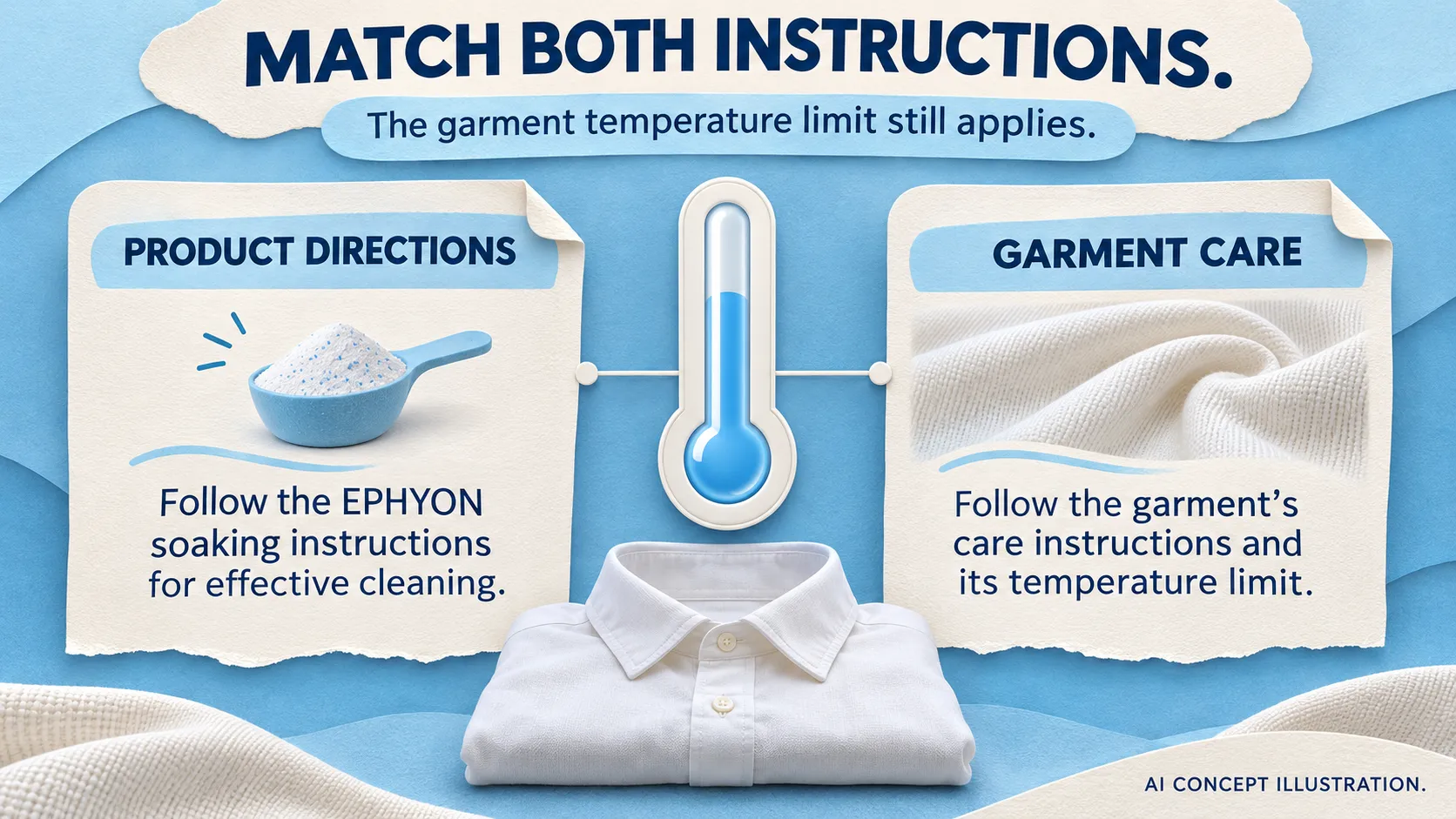
GINETEX explains that the washing temperature on the care label is a maximum that must not be exceeded. Do not remember only a product’s mention of warm or hot water and overlook the garment’s limit. GINETEX: Care Symbols
For example, if a garment permits only 30°C, do not put it in hotter water merely to dissolve powder faster. If product requirements and garment limits do not overlap, choose another suitable method. Nor should you lower the temperature yourself and assume the original performance still applies.
Step 3: Dissolve fully before adding the garment
EPHYON’s product guidance requires full dissolution before adding suitable items and warns that undissolved powder may cause patchy discoloration. Do not pile undissolved powder on one area and substitute prolonged contact for correct preparation. EPHYON: Bio-Enzyme Soaking Powder, 320g
Match product and water amounts to the label, using dedicated measuring equipment rather than assuming more is better. Local treatment must also follow permitted directions; do not improvise a concentrated paste on the fabric.
Step 4: Follow the current label’s time, then inspect and rinse
Use the soaking time stated on the current product label for the relevant item. Set a timer and inspect after the specified conditions are met. If improvement is limited, reassess the stain and compatibility rather than automatically leaving it overnight.
After soaking, complete permitted washing, rinsing and drying according to both sets of directions. Disappearing foam or lingering fragrance does not prove the process is complete. A whiter-looking surface does not replace checking the fabric’s color and condition.
Assess shoes separately; soaking powder is not a universal shoe treatment
ACI recommends following the footwear’s care instructions and notes that some detergents and mechanical action can damage leather or adhesives. Do not immerse shoes lacking clear soaking permission or containing sensitive materials or bonded construction. American Cleaning Institute: Sneaker Cleaning
Remove loose mud first and follow the shoe manufacturer’s permitted method. Shoes needing local cleaning require suitable spot-care products and tools. Do not transfer a clothing-soak method directly to uppers, soles and joined sections.
Use separately and keep dry: habits after opening matter
This product warns against mixing with chlorine bleach or bleaching powder. Do not add 84 disinfectant, toilet cleaner or other cleaning products yourself. Health Canada likewise advises following labels, not mixing household chemicals and keeping original packaging and safety information. EPHYON: Bio-Enzyme Soaking Powder, 320g · Health Canada: Use Household Chemicals Safely
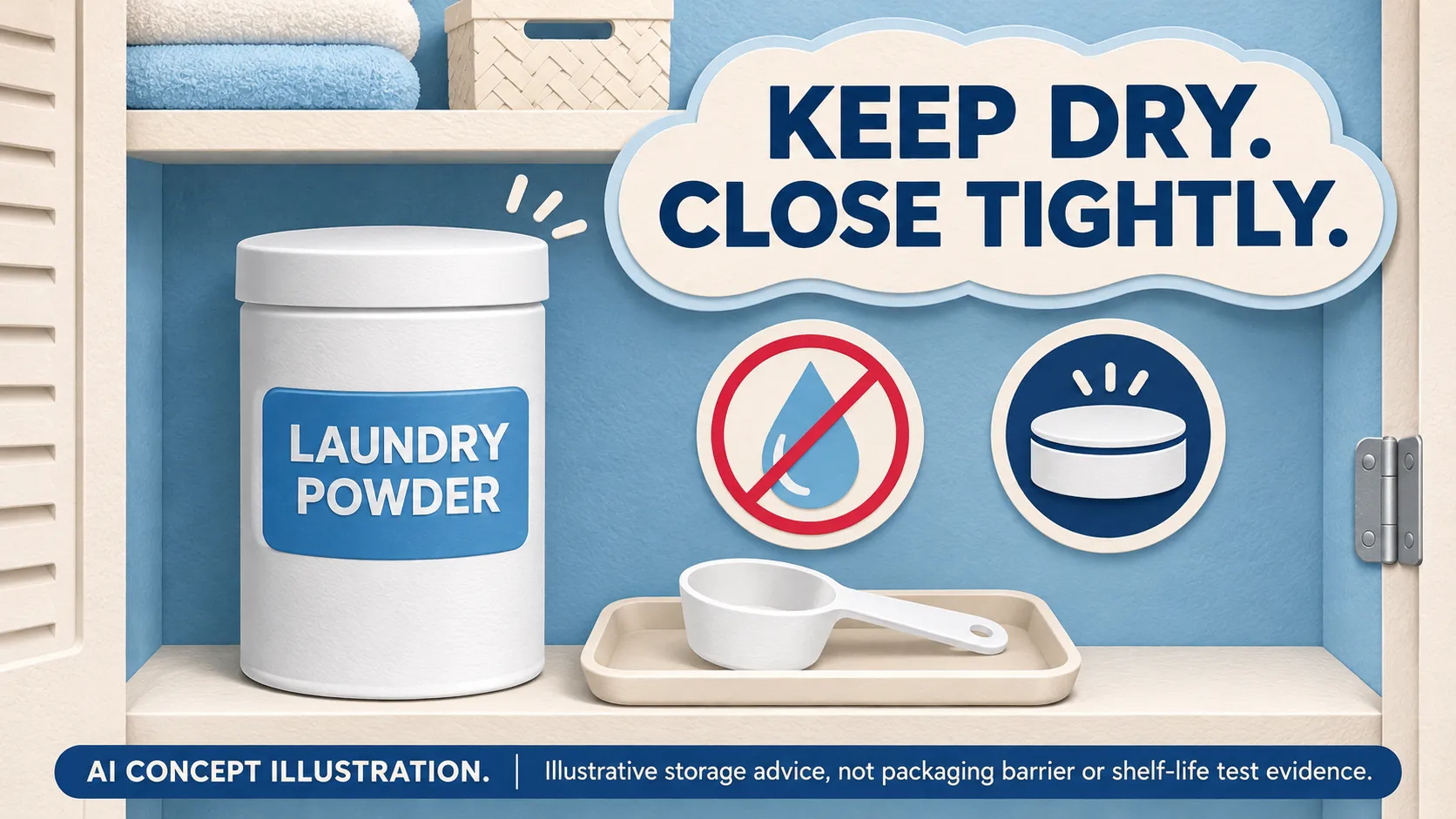
Use a dry dedicated measure, close after use and store as labeled away from children and pets. Follow instructions for hand and eye protection, avoid airborne dust and direct powder contact, and do not store the product in beverage containers. Health Canada: Use Household Chemicals Safely
Make directions part of the product experience
For EPHYON, discussing soaking products goes beyond powder appearance and fragrance. Users should readily understand suitable items, excluded materials, dissolution and measuring.
For private-label and channel clients, we aim to start with real care situations and discuss product selection together with use information. Clear limits and practical steps help users understand the product and make service part of each laundry routine.
Related product: EPHYON Bio-Enzyme Soaking Powder
References and original sources
EPHYON: Bio-Enzyme Soaking Powder, 320g
https://www.yipinjing.com/products/bio-enzyme-soaking-powder/
GINETEX: Care Symbols
American Cleaning Institute: Sneaker Cleaning
American Cleaning Institute: How to Use Bleach
https://www.cleaninginstitute.org/cleaning-tips/clothes/detergents/how-use-bleach
Health Canada: Use Household Chemicals Safely
https://www.canada.ca/en/health-canada/services/home-safety/household-chemical-safety.html
Product directions and garment or footwear care instructions take precedence over general laundry guidance. Follow the current bottle label for soaking time.
Manufacturing Support · OEM / ODM
Need custom product development or manufacturing?
Our dual production bases provide ODM development and OEM manufacturing for household cleaning products, with solutions tailored to your formulation, packaging, and delivery requirements.